Parents often ask what they can do between sessions to make progress stick. The answer is not a set of fancy gadgets or a therapist’s couch brought into the living room. It is a handful of reliable habits and simple tools, applied with consistency, that help a child’s nervous system settle and a family’s rhythm become more predictable. When home becomes a lab for small emotional experiments, change spreads more quickly and sessions in child therapy become more effective.
Why home practice works
Children learn in context. If a child can identify feelings in an office but melts at the first hint of sibling rivalry in the kitchen, the skill has not generalized. Practice at home strengthens the paths between skill and situation. It also shows your child that mental health is part of daily life, not a special project that happens once a week with a therapist. In my experience, families who adopt two or three home tools and stick with them for 4 to 6 weeks see measurable improvements in compliance, sleep, and emotional recovery time after upsets. The gains are rarely dramatic on day one, but the compounding effect is real.
Set the foundation: safety and predictability
Before adding techniques, check the basics. Kids regulate better when their day has reliable anchors. A consistent wake time, mealtimes with protein, at least 45 minutes of outdoor movement on most days, and a wind-down routine in the evening create the conditions where tools can work. If the family environment is charged with frequent conflict, tools will falter. In those cases, brief couples therapy can help caregivers align on routines and discipline, which then lowers household reactivity. When caregivers pull in the same direction, children feel it.
Predictability does not mean rigidity. Build in choices that are safe and real: two outfits in the morning, which vegetable at dinner, or which book at bedtime. Choice supports a child’s need for control without handing them the steering wheel.
A starter kit you can assemble this weekend
The best home tools fit in a shoebox. You do not need elaborate materials or expensive subscriptions. Gather a few items you can use across several strategies.
- A visual timer, a pack of sticky notes, and a simple weekly calendar with large boxes Art supplies: markers, crayons, paper, a small tray of play dough A set of feeling faces or homemade emotion cards using family photos A pair of small beanbags or soft balls, plus a jump rope or mini-trampoline if space allows Noise-reducing headphones and a soft sensory item like a textured square or weighted lap pad
Place the kit somewhere obvious and label it as your family’s “calm kit” or “toolbox.” Naming it makes it easier to cue in the moment: let’s grab the toolbox.
Emotion coaching in the moment
Emotion coaching is not about fixing. It is about naming and normalizing feelings while keeping boundaries intact. Parents often try to reason a child out of a feeling. That usually backfires. A better sequence starts with reflect, then limit, then problem-solve. For example: You’re furious your tower fell. That makes sense. Blocks stay on the mat. Want help rebuilding or do you want a break first?
When practiced regularly, this approach lowers the time it takes a child to return to baseline after upsets. It also reduces arguing over limits because the child feels seen. If your child rejects the reflection, shorten it. Try a simple, one-word label paired with presence: Mad. I’m here. Hold the line on the limit while staying warm and steady.
A frequent worry is that empathy rewards misbehavior. It does not. The limit still stands. You can be kind and firm at the same time. In fact, children comply more consistently with adults who acknowledge the hard part before enforcing the rule.
Visual supports that actually get used
Visual schedules, timers, and first-then cards are staples for a reason. A child’s working memory is limited, especially when stressed or when ADHD traits are present. Externalizing the plan reduces conflict. Keep visuals concrete and brief. A morning routine might be four pictures: dress, breakfast, brush, backpack. Tape them at the child’s eye level in the hallway. When resistance shows up, point to the visual instead of lecturing. Pair it with the timer set for an achievable chunk, such as 8 minutes to get dressed.
For transitions, first-then cards shine. First shoes, then scooter. Take a photo of each step, print it, and clip the two together on a ring. Some families keep a ring on a hook by the door and another in the car. Over time, the words “first, then” become a cue for structure, which reduces bargaining.
Play as the language of change
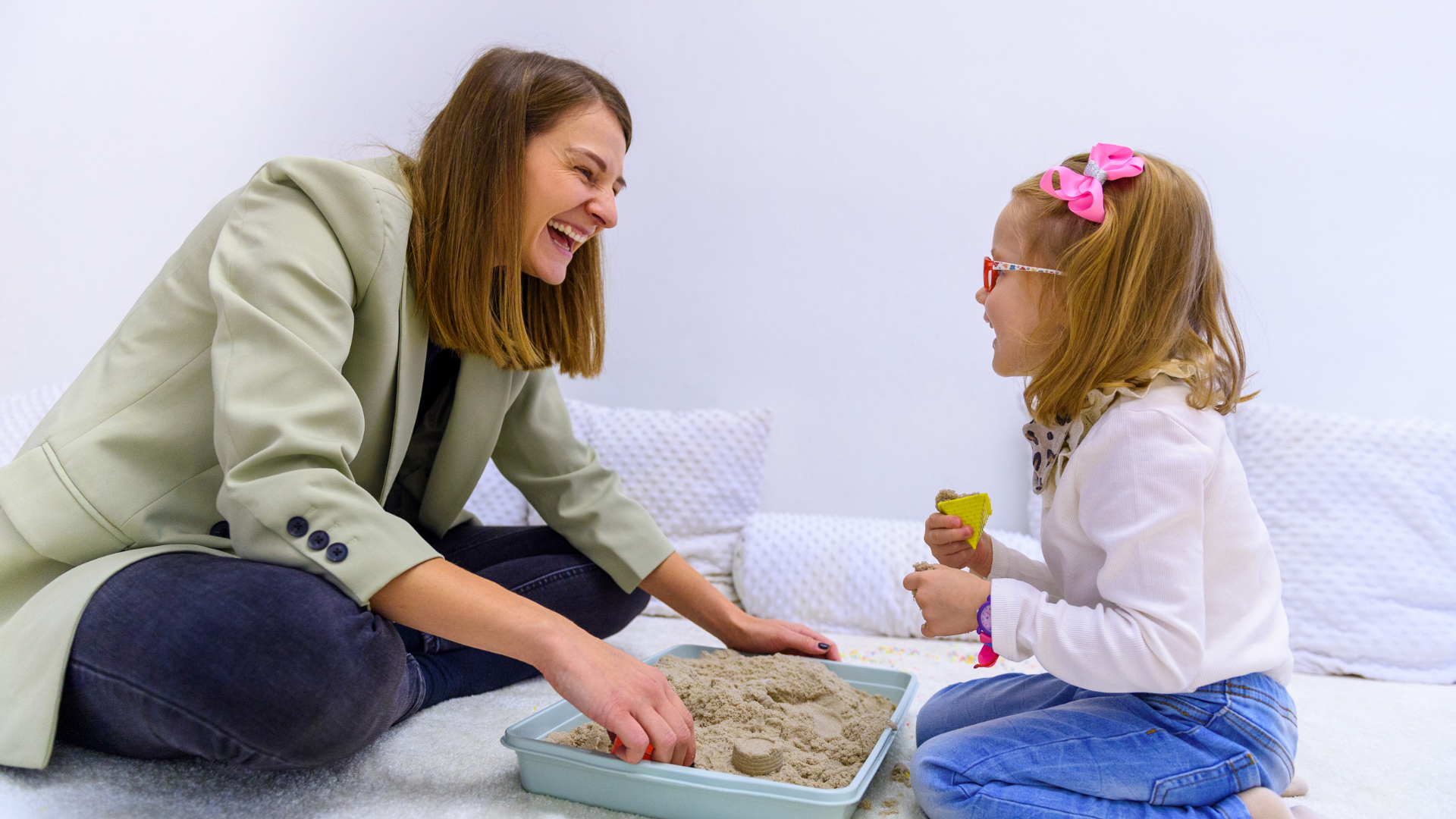
Formal child therapy often uses play as the medium because play is how children process experiences. At home, you can dedicate 10 to 15 minutes a few times a week to child-led play. Choose a consistent time, clear distractions, and set a simple frame: This is your special playtime. You pick. I will follow. Unless safety is at risk, let the child lead. Track their play out loud with neutral, descriptive language. I see you’re building the wall higher. That car is zooming fast. Avoid questions and teaching in this window. Children use the freedom to explore themes that matter to them, and the non-intrusive attention fills the attachment tank.
If a child repeatedly reenacts scary scenes or aggressive battles, do not shut it down unless it escalates to danger. Reflect the theme. Those guys look powerful. That one keeps winning. Later, outside of playtime, you can check in gently during a calm moment. You’ve been playing lots of battles. Are there any battles at school lately? This keeps channels open without making play feel policed.
Sensory strategies for nervous system health
Many meltdowns are nervous system problems in disguise. If your child goes from zero to sixty quickly, look for sensory mismatches. A child who under-registers movement may get revved up at dinner because they never got enough heavy work earlier. Add 10 minutes of wheelbarrow walks, wall push-ups, or scooter board races before sedentary times. If your child is noise sensitive, offer noise-reducing headphones during errands or when a sibling practices the violin. Short sensory breaks at predictable points, like after school and before homework, lower the load before it spills.
Create a calm corner, not a punishment corner. A beanbag, a few picture books, the weighted lap pad from your kit, and a small basket of fidgets are enough. Teach your child to enter the space voluntarily when their body needs it, and model it yourself after a hard work call so it does not feel like exile.
Behavior shaping without bribes
Sticker charts are not magic, but systematic reinforcement changes behavior. The trick is making the target specific and bite-sized. Pick one behavior that matters. Frame it in the positive: stay in bed until the sun clock turns yellow, hang backpack on the hook after school, teeth brushed by 7:30. Link the behavior to a small, immediate privilege like choosing the family song on the way to school or picking the bedtime story. Avoid large, delayed rewards. They turn into bargaining chips and lose their shaping power.
Catch and label the behavior you want. I noticed you put your lunch box on the counter without me asking. That’s responsibility. Attach the label to an identity you want to grow. Over time, children adopt the script: I’m a kid who takes care of my stuff. It sounds subtle, but identity-based reinforcement outlasts sticker phases.
Simple cognitive tools for worries and big feelings
Cognitive behavioral therapy scales down well for children. Start with externalizing worries. Give the worry a silly name and a look. Some kids draw their worry monster on a sticky note. When worries talk, help your child talk back. Thanks, Worry, not helpful right now. I’ve got math facts and you always exaggerate. Post the stickies where the child can see wins: math test with a check mark, sleepover picture, a certificate from swim class. It becomes evidence that the child has done hard things even with Worry chattering.
For older children, teach a brief thought check. What’s the story my brain is telling me? What are three other possibilities? What would I say to a friend who had this thought? Keep it fast. The goal is not perfection, it is loosening the grip of catastrophic thinking.
Mindful breathing is useful, but most kids need something concrete to do with their hands. Try square breathing traced on a sticky note border, finger breathing where they trace up and down each finger while inhaling and exhaling, or blowing bubbles slowly to see who can make the biggest bubble without popping it. The breath cue is built in.
Trauma sensitive support and EMDR-informed stabilizers
If your child has a trauma history, home is a critical site for stabilization. Do not attempt full trauma processing on your own. That belongs in therapy with trained support, such as EMDR therapy or trauma-focused CBT. At home, emphasize safety signals and predictable caregiving. One EMDR-adjacent stabilizer families find helpful is the Butterfly Hug. Teach your child to cross their arms over their chest and tap alternately on each upper arm, left then right, for 30 seconds while noticing three blue things in the room. It is a bilateral, self-soothing exercise, not trauma processing. I use it as a reset before homework, after a nightmare, or before a challenging appointment.
Nighttime is often when trauma-related anxiety peaks. Create a short, repeatable tuck-in script. The same phrases, in the same order, paired with the same sensory anchors, help the brain settle. A small flashlight under the pillow, a lavender sachet, and a photo of a safe place drawn by the child can do more than a long lecture about safety.
If trauma reactions are frequent or intense, bring a family therapist into the loop. Family therapy can coordinate caregiver responses, reduce accidental triggers in the home, and reinforce the systemic changes that lower reactivity for everyone.
ADHD realities and what testing adds
Parents sometimes try every tool and still feel stuck. If attention, impulse control, or hyperactivity consistently interfere with routines, consider ADHD testing. A good evaluation is not just a label. It clarifies the child’s attentional profile, working memory, and processing speed. It also screens for co-occuring issues like anxiety or a learning disorder. In practice, these data fine-tune the plan. A child with slow processing speed benefits from extra wait time and fewer steps per instruction. A child with strong hyperactivity but average working memory might do well with movement infused into study and tight external structure, like a timer and checklists.
Medication can be part of a comprehensive ADHD plan, but home tools still matter. Movement before school, visual schedules, and rewards that are immediate make a visible difference. Some families need help aligning on whether and when to try medication. Couples therapy can be useful for resolving those differences privately so that your child does not feel caught between caregivers.
When school becomes a partner
Teachers see your child for hours each day. https://www.nkpsych.com/504-iep-assessment-support Share your core tools with them. If you use a first-then approach at home, ask how a similar cue could work in the classroom. Keep communication pointed. One parent email every two weeks that includes what is working at home, a clear ask, and a brief data point tends to get better traction than daily messages. If a school team suggests accommodations, like movement breaks or reduced homework, tie them to the data from ADHD testing or the therapist’s goals. Systems work best when they speak the same language.
A five-step de-escalation script for meltdowns
When big feelings erupt, a short, practiced script helps adults stay steady. Practice it when calm so the words are ready. Keep your voice low and your sentences short.
- Step back and scan for safety. Move siblings, clear sharp objects, lower lights if possible. No lecturing. Name and contain. Short reflection plus boundary. Angry and not safe. I’ll keep you safe. The couch is for sitting, not throwing. Offer a regulation choice. Two options only. Water or squeeze the pillow. You choose. Wait ten seconds. Co-regulate with a sensory anchor. Breathe with them, use the visual timer for one minute, or model the Butterfly Hug. Minimal words. Close the loop. When calm returns, label the recovery. Your body slowed. You made it through. Reset the limit and move on.
If aggression escalates beyond your capacity to keep everyone safe, it is not a parenting failure to step out and call for help. Safety comes first. Later, debrief briefly with your child, then with your co-parent. Align on one change to try next time, such as moving breakable items or adjusting the time of day for hard tasks.
Teaching problem solving with the three-box method
Children often oscillate between helplessness and defiance because they do not see a path to change. The three-box method puts problems in containers. Draw three boxes on paper. Label them: My control, Our control, Not our control. Brainstorm where parts of the problem belong. A teammate who teases goes in “Not our control.” How you respond, who you sit with at lunch, and whether you practice a comeback go in “My control.” Whether the teacher assigns seats goes in “Our control” because it requires adult collaboration. This framing reduces perseveration on what cannot change and clarifies where action is possible.
Sleep as a force multiplier
No tool works well when a child is short on sleep. For school-age children, target 9 to 11 hours, and for teens, 8 to 10, recognizing real variation. If your child wakes repeatedly, check for inconsistent bedtimes, late caffeine in sodas or chocolate, hidden light from devices, and evening bursts of vigorous play that push bedtime adrenaline. Bedtime anxiety responds to routines with two reliable cues: body cool-down and cognitive wind-down. A 10-minute bath or warm shower followed by a slightly cooler bedroom helps the body shift. For the mind, use a predictable sequence: two pages of a familiar book, one gratitude sentence written on a sticky note, then a recorded story with a 15-minute shutoff.

Tech boundaries without power struggles
Screens are part of most households. Clarity prevents constant negotiation. Post a family media plan in the kitchen. Define when screens are free, earned, or off-limits. The more neutral and visible the plan, the less it feels like you are inventing rules on the fly. Pair screens with positive behaviors you are already shaping. After outside time and backpack check, you earn 20 minutes. Use a visual timer so the end is not a surprise. If your child escalates when time ends, shift screen time earlier in the day when their capacity is higher, and end with a predictable transition to something sensory, like a snack plus music and a short dance.
A brief family case vignette
A nine-year-old with school refusal and evening meltdowns arrived in my practice after months of morning stalemates. Parents reported trying everything from pep talks to threats. We added three home tools: a visual morning routine with a timer, 10 minutes of child-led play after school, and a de-escalation script for evenings. We also aligned the caregivers’ responses through two focused family therapy sessions, including agreeing on language around school worries.
Within three weeks, morning transitions shortened by about 12 minutes on average, measured by a simple phone timer log. Meltdowns still occurred, but recovery time dropped from 40 minutes to 15. The child started using the worry monster sticky notes to park school fears after dinner. School attendance rose from three to four days a week. These are not miracle numbers, but they reflect what is typical when a family commits to a few tools and uses them consistently. Over the next two months, we fine-tuned with movement before homework and introduced the Butterfly Hug as a pre-bed cue. The steadiness at home made individual child therapy more effective, and school staff could reinforce the same cues.
When home tools are not enough
There are limits to what you can and should handle alone. Seek professional support if your child talks about wanting to die, engages in self-harm, loses significant weight, has panic attacks that impair daily life, or shows regression like toileting accidents after years of dryness. Frequent violent outbursts, cruelty to animals, or fire setting require immediate attention. If trauma history is present, coordinate with a clinician trained in EMDR therapy or an equivalent evidence-based approach. If family conflict fuels the symptoms, brief couples therapy or family therapy often clears logjams that no sticker chart can fix.
Keeping track without turning your home into a clinic
Data helps, but perfection is not necessary. Pick two metrics and track them for a month. Good options include minutes from wake-up to out-the-door, number of aggressive incidents per day, or nights slept through. Mark them on the calendar with quick codes. A dot for smooth, a slash for bumpy, an X for crisis. Patterns will appear. You might find Wednesdays are always worse after a late soccer practice, or that adding heavy work after school reduces evening volatility. Adjust one variable at a time so you can see its effect.
How to choose which tools to start with
Start with one calm tool and one structure tool. Good pairs include child-led play plus a visual schedule, or the de-escalation script plus a calm corner. Introduce them when your child is regulated, not mid-crisis. Explain simply: We’re trying something new to help our family have an easier time. Then demo. Use the tool daily for at least two weeks before you judge it. If it seems to fail at first, check the dose and the timing. Many tools work once the conditions are right.
If caregivers disagree on approach, pause and address alignment. Consistency between adults matters more than any single technique. A few sessions of couples therapy focused on parenting teamwork can prevent months of friction and mixed messages for your child.

The long game
Children grow out of some phases, but they do not grow out of nervous systems. The skills you build now are the ones they will draw on later in friendships, sports, and school. The best home tools are small and repeatable. They ask you to be a steady mirror, not a flawless manager. As your child changes, your tools will, too. Keep the ones that work, discard the rest without guilt, and do not hesitate to bring in outside help. Home is a powerful setting for change, and with a modest kit, a shared plan, and steady practice, most families see their days become calmer and more connected.
Name: NK Psychological Services
Address: 329 W 18th St, Ste 820, Chicago, IL 60616
Phone: 312-847-6325
Website: https://www.nkpsych.com/
Email: [email protected]
Hours:
Sunday: Closed
Monday: 8:00 AM - 5:00 PM
Tuesday: 8:00 AM - 5:00 PM
Wednesday: 8:00 AM - 5:00 PM
Thursday: 8:00 AM - 5:00 PM
Friday: 8:00 AM - 5:00 PM
Saturday: Closed
Open-location code (plus code): V947+WH Chicago, Illinois, USA
Map/listing URL: https://www.google.com/maps/place/NK+Psychological+Services/@41.8573366,-87.636004,570m/data=!3m2!1e3!4b1!4m6!3m5!1s0x880e2d6c0368170d:0xbdf749daced79969!8m2!3d41.8573366!4d-87.636004!16s%2Fg%2F11yp_b8m16
Embed iframe:
"@context": "https://schema.org",
"@type": "ProfessionalService",
"name": "NK Psychological Services",
"url": "https://www.nkpsych.com/",
"telephone": "+1-312-847-6325",
"email": "[email protected]",
"address":
"@type": "PostalAddress",
"streetAddress": "329 W 18th St, Ste 820",
"addressLocality": "Chicago",
"addressRegion": "IL",
"postalCode": "60616",
"addressCountry": "US"
,
"openingHoursSpecification": [
"@type": "OpeningHoursSpecification",
"dayOfWeek": "Monday",
"opens": "08:00",
"closes": "17:00"
,
"@type": "OpeningHoursSpecification",
"dayOfWeek": "Tuesday",
"opens": "08:00",
"closes": "17:00"
,
"@type": "OpeningHoursSpecification",
"dayOfWeek": "Wednesday",
"opens": "08:00",
"closes": "17:00"
,
"@type": "OpeningHoursSpecification",
"dayOfWeek": "Thursday",
"opens": "08:00",
"closes": "17:00"
,
"@type": "OpeningHoursSpecification",
"dayOfWeek": "Friday",
"opens": "08:00",
"closes": "17:00"
],
"geo":
"@type": "GeoCoordinates",
"latitude": 41.8573366,
"longitude": -87.636004
,
"hasMap": "https://www.google.com/maps/place/NK+Psychological+Services/@41.8573366,-87.636004,570m/data=!3m2!1e3!4b1!4m6!3m5!1s0x880e2d6c0368170d:0xbdf749daced79969!8m2!3d41.8573366!4d-87.636004!16s%2Fg%2F11yp_b8m16"
NK Psychological Services provides therapy and psychological assessment services for children, adults, couples, and families in Chicago.
The practice offers support for concerns that may include ADHD, autism, trauma, relationship challenges, parenting concerns, and emotional wellbeing.
Located in Chicago, NK Psychological Services serves people looking for in-person care at its South Loop area office as well as secure virtual appointments when appropriate.
The team uses a psychodynamic, relationship-oriented approach designed to support meaningful long-term change rather than only short-term symptom relief.
Services include individual therapy, child therapy, family therapy, couples therapy, EMDR therapy, and psychological testing for diagnostic clarity and treatment planning.
Clients looking for a Chicago counselor or psychological assessment provider can contact NK Psychological Services at 312-847-6325 or visit https://www.nkpsych.com/.
The office is located at 329 W 18th St, Ste 820, Chicago, IL 60616, making it a practical option for clients seeking care in the city.
A public business listing is also available for map directions and basic local business details for NK Psychological Services.
For people who value thoughtful, collaborative care, NK Psychological Services presents a team-based model centered on depth, context, and individualized treatment planning.
Popular Questions About NK Psychological Services
What does NK Psychological Services offer?
NK Psychological Services offers therapy and psychological assessment services for children, adults, couples, and families in Chicago.
What kinds of therapy are available at NK Psychological Services?
The practice lists individual therapy for adults, child therapy, family therapy, couples therapy, EMDR therapy, and psychodynamic therapy among its services.
Does NK Psychological Services provide psychological testing?
Yes. The website states that the practice provides comprehensive psychological and neuropsychological testing, including support related to ADHD, autism, learning differences, and emotional functioning.
Where is NK Psychological Services located?
NK Psychological Services is located at 329 W 18th St, Ste 820, Chicago, IL 60616.
Does NK Psychological Services offer virtual appointments?
Yes. The website says the practice offers in-person sessions at its Chicago location and secure virtual appointments.
Who does NK Psychological Services serve?
The practice works across the lifespan with individuals, couples, and family systems, including children and adults seeking therapy or assessment services.
What is the treatment approach at NK Psychological Services?
The website describes the practice as evidence-based, relationship-oriented, and grounded in psychodynamic theory, with a collaborative consultation-centered care model.
How can I contact NK Psychological Services?
You can call 312-847-6325, email [email protected], or visit https://www.nkpsych.com/.
Landmarks Near Chicago, IL
Chinatown – The NK Psychological Services location page notes the office is about four blocks from the Chinatown Red Line station, making Chinatown a practical local landmark for visitors.Ping Tom Park – The practice states the office is directly across the river from the ferry station in Ping Tom Park, which makes this a useful nearby reference point.
South Loop – The office sits within the broader Near South Side and South Loop area, a familiar point of reference for many Chicago residents.
Canal Street – The location page references Canal Street for nearby street parking access, making it a helpful directional landmark.
18th Street – The practice specifically notes entrance and garage details from 18th Street, so this is one of the most practical navigation landmarks for visitors.
I-55 – The office is described as accessible from I-55, which is helpful for clients traveling from other parts of Chicago or nearby suburbs.
I-290 – The location page also identifies I-290 as a convenient approach route for appointments.
I-90/94 – Clients driving into the city can use I-90/94 as another major access route mentioned by the practice.
Lake Shore Drive – The office notes accessibility from Lake Shore Drive, which is useful for clients traveling from the north or south lakefront areas.
If you are looking for therapy or psychological assessment in Chicago, NK Psychological Services offers a centrally located office with both in-person and virtual care options.